FlowPFMEA
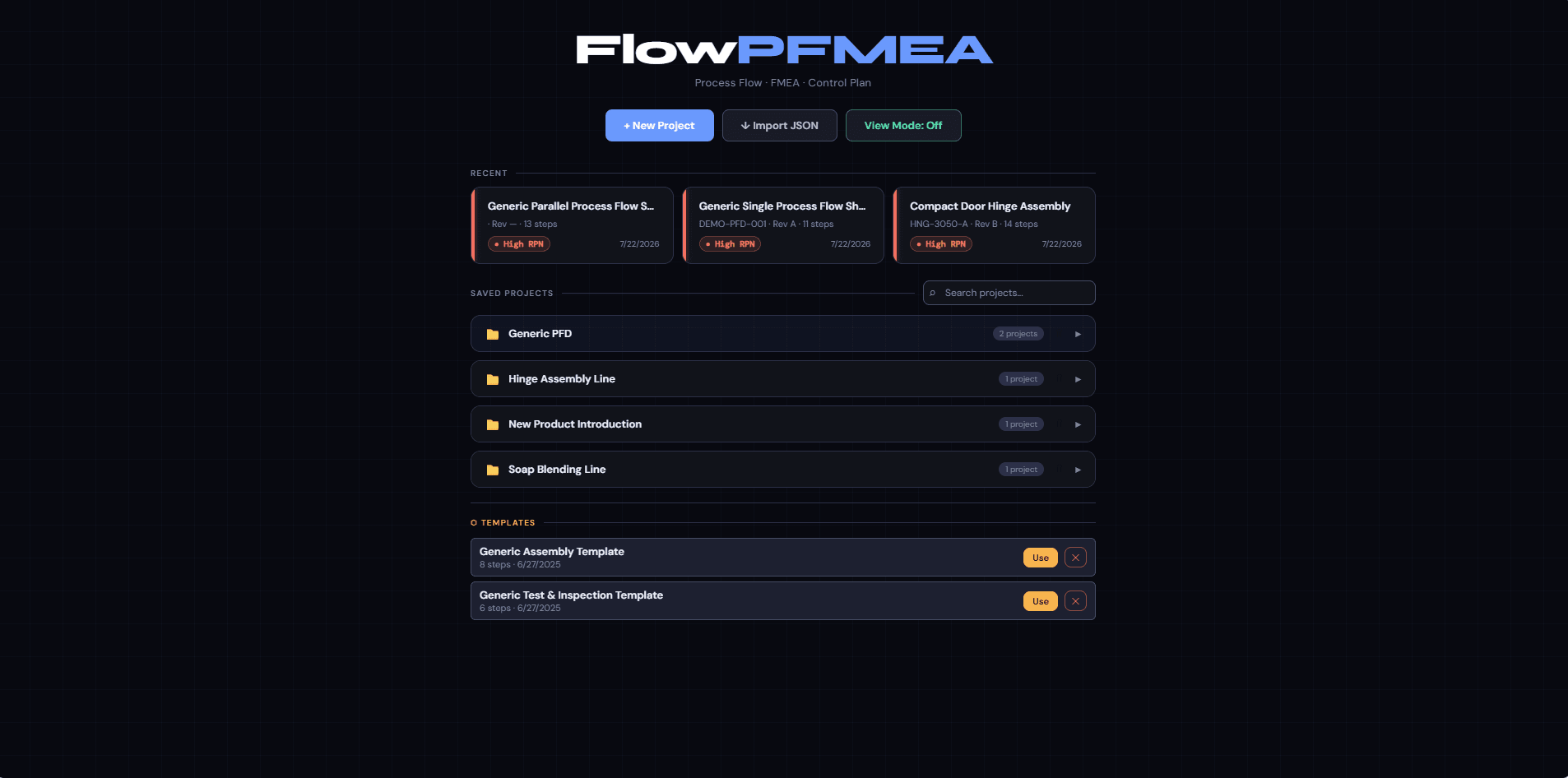
A browser-based PFD, PFMEA, and Control Plan tool that replaces scattered spreadsheets with one structured, linked workflow.
Overview
Process documentation lived across disconnected spreadsheets that constantly drifted out of sync, so I built a browser-based tool that links process steps, failure modes, and controls into one workflow and cuts PFMEA build time by about half.
The challenge
The PFD, PFMEA, and Control Plan were three separate documents with no standardized way to score or prioritize failure modes by risk. One change meant hand-editing all three and hoping they matched, and building a new PFMEA for a different part meant recreating the whole structure from scratch every time.
What I did
- 1
Identified the need
An earlier investigation into air-leak test failures showed there was no formal way to map failure analysis back to the process, which became the direct reason this tool was built.
- 2
Mapped the real workflow
Studied how the team actually documented process steps, failure modes, and controls, mapping a full 19-step process flow.
- 3
Designed a linked data model
Modeled process steps, failure modes, and controls as linked records instead of three separate documents, with failure modes scored by RPN (severity times occurrence times detection).
- 4
Built it in the browser
Built a browser-based app to view and edit documentation without extra software, including PDF and Excel export so reviewers don't need access to the app itself.
- 5
Rolled it out and trained the team
Added template and duplication features so future parts start from an existing structure instead of from scratch, then trained the team on how to use it.
Impact
3 → 1
Three disconnected documents unified into one linked workflow.
~50% faster
PFMEA build time per process, down from 20 to 60 hours to 10 to 22 hours.
~$25,000
Estimated annual savings (indirect), based on faster PFMEA development time carried across future projects.